
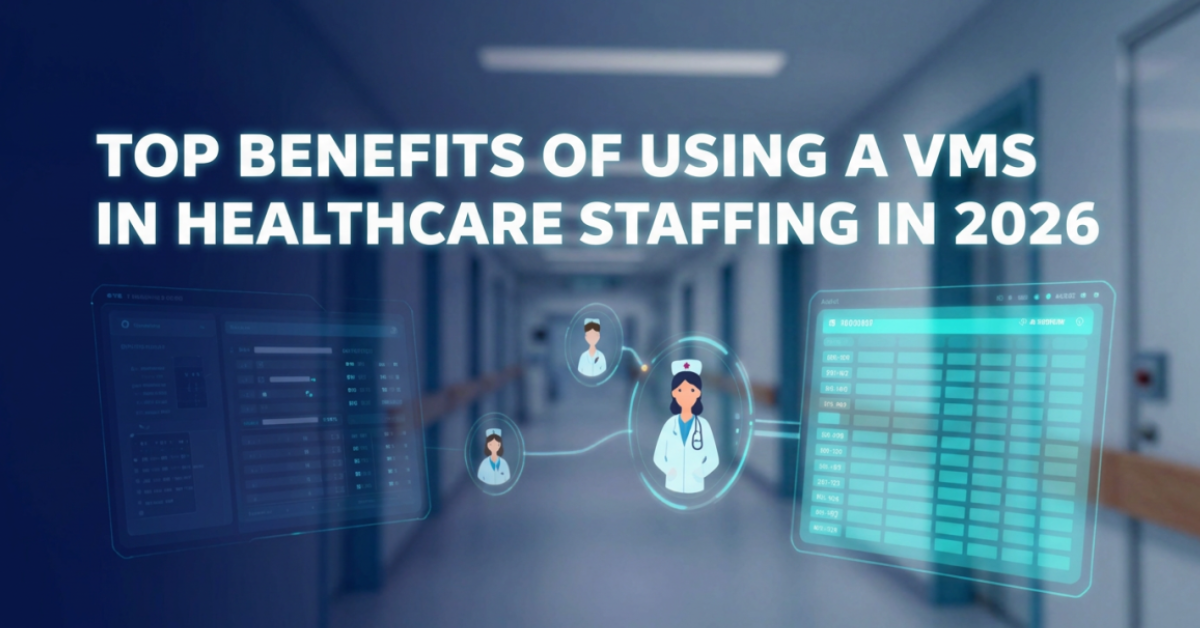
Between growing workforce shortages, rising compliance requirements, and increasing demand for flexible staffing models, recruiters and staffing agencies are under constant pressure to move faster while maintaining quality in the healthcare industry.
This is where VMS in healthcare is becoming a major operational advantage.
Healthcare organizations and staffing agencies are no longer relying solely on manual communication, spreadsheets, or disconnected systems to manage contingent labor. Instead, they are turning to Vendor Management Systems (VMS) to streamline staffing operations, improve visibility, and create more efficient workflows.
But for many recruiters, the question still remains:
What is VMS in healthcare, and why is it becoming essential in 2026?
This guide breaks it all down—from the basics to the real operational benefits healthcare staffing teams are seeing today.
A Vendor Management System (VMS) is a technology platform used to manage contingent workforce operations, staffing vendors, and temporary labor requests.
In healthcare staffing, a VMS acts as a centralized system where hospitals, healthcare facilities, MSPs (Managed Service Providers), and staffing agencies coordinate staffing needs.
A typical healthcare VMS helps organizations:
Simply put, vms in healthcare creates a more organized and transparent staffing process between facilities and staffing partners.
The healthcare industry is facing increasing staffing complexity.
Facilities are managing:
At the same time, staffing agencies are juggling:
Without centralized systems, these processes quickly become chaotic.
That’s why healthcare VMS adoption has accelerated significantly over the last few years.
To understand the value, it helps to look at how the process typically flows.
A hospital or healthcare facility creates a requisition inside the VMS platform.
This may include:
Approved staffing agencies connected to the VMS receive the requisition in real time.
Recruiters can then:
The healthcare facility reviews submissions directly within the platform.
Communication, approvals, and status updates happen inside the system instead of through scattered emails and spreadsheets.
Once selected, onboarding and credentialing processes begin.
A healthcare VMS often tracks:
The system continues supporting operational workflows through:
The real value of a VMS becomes clear when you look at operational outcomes.
Healthcare staffing moves fast.
Delays in communication or submission can result in:
A VMS centralizes requisitions and automates distribution, allowing staffing agencies to respond faster.
This improves:
One of the biggest challenges in healthcare staffing is lack of visibility.
Without centralized systems, agencies often struggle to answer:
A healthcare VMS provides real-time tracking and operational transparency.
This helps recruiters and operations teams make faster, more informed decisions.
Compliance is critical in healthcare staffing.
Missing or expired credentials can delay placements and create regulatory risks.
Modern VMS platforms help agencies manage:
This reduces manual oversight and improves audit readiness.
Many staffing teams still spend hours managing:
A VMS automates many of these workflows.
This allows recruiters and operations teams to focus on:
Instead of repetitive administrative tasks.
Communication breakdowns are common in healthcare staffing.
A VMS creates a centralized communication environment where:
can collaborate more efficiently.
This minimizes confusion and improves coordination across the staffing lifecycle.
Healthcare organizations need visibility into vendor performance.
A VMS allows facilities to evaluate staffing partners based on:
This creates accountability and encourages higher operational standards.
Healthcare staffing generates large amounts of operational data.
Without centralized systems, much of that data remains underutilized.
Modern healthcare VMS platforms provide analytics that help organizations:
In 2026, data visibility is becoming a major competitive advantage.
As staffing agencies grow, manual coordination becomes increasingly difficult.
A VMS helps scale operations by:
This allows agencies to expand without dramatically increasing administrative overhead.
Many staffing agencies still operate using fragmented workflows.
Common challenges include:
Over time, these inefficiencies directly impact:
The role of VMS platforms is evolving rapidly.
Today’s systems are moving far beyond basic requisition management.
Modern healthcare VMS platforms increasingly include:
The future of healthcare staffing is becoming more connected, automated, and data-driven.
One of the biggest operational problems agencies face is disconnected systems.
Recruitment, onboarding, credentialing, scheduling, and workforce management often exist in separate tools.
This creates:
Integrated staffing platforms solve this problem by creating a unified workflow from sourcing to deployment.
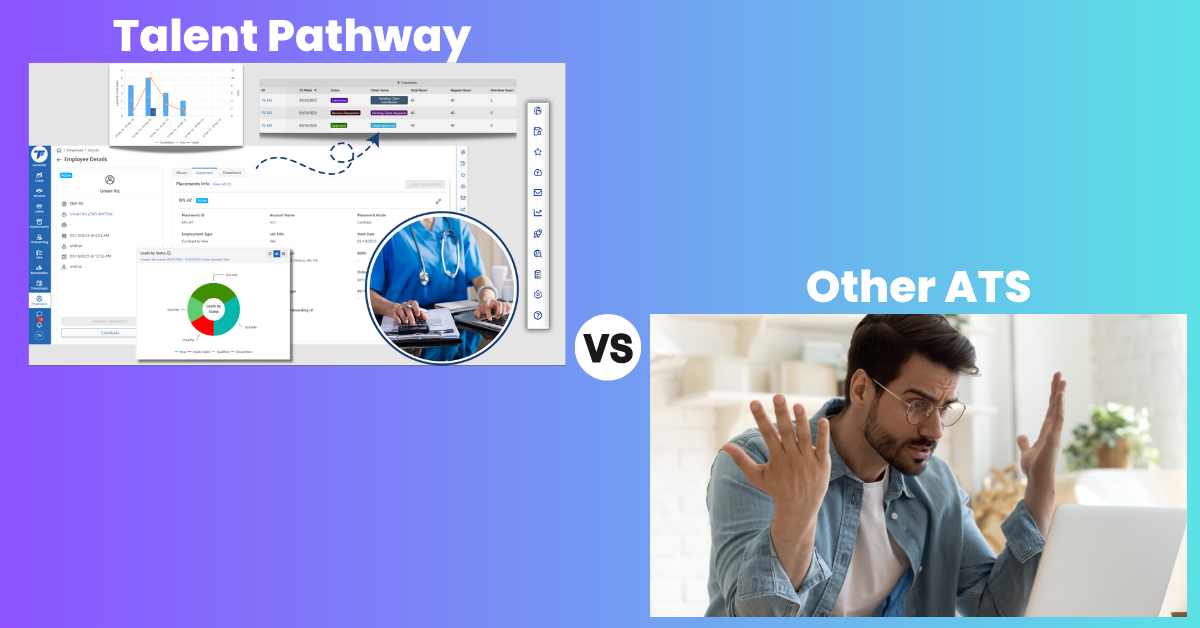
At Talent Pathway, we understand that staffing agencies need more than isolated tools.
Modern healthcare staffing requires connected workflows that support:
By centralizing these workflows, agencies can:
As VMS-driven staffing models continue growing, having an integrated platform becomes increasingly important.
The growing adoption of vms in healthcare reflects a larger shift happening across the healthcare staffing industry.
Facilities and staffing agencies are moving away from fragmented workflows and toward centralized, technology-driven operations that improve speed, visibility, and compliance.
For recruiters and staffing agencies, understanding how a healthcare VMS works is no longer optional—it’s becoming essential.
As staffing demands continue to rise in 2026, the agencies that adapt to connected, data-driven workflows will be best positioned to scale efficiently and compete successfully.
Talent Pathway helps healthcare staffing agencies streamline recruitment, onboarding, workforce management, and compliance through a connected platform built for modern staffing workflows.
With intelligent automation and centralized visibility, your team can:
The future of healthcare staffing is connected, fast, and technology-driven.
Talent Pathway helps you stay ahead of it!