
Choosing the right healthcare scheduling software in 2026 is becoming a critical priority for healthcare staffing agencies. With rising demand for nurses, allied health professionals, and per diem staff, agencies can no longer rely on spreadsheets, outdated tools, or disconnected systems to manage shifts. Modern healthcare staffing requires smarter, faster, and compliance-ready scheduling software for healthcare that eliminates manual errors and supports real-time workforce visibility.
This guide is designed to create awareness among healthcare staffing agencies evaluating better solutions. We’ll break down common scheduling pain points, explain why traditional tools fall short, and show how purpose-built employee scheduling software for healthcare can help agencies scale efficiently.
Healthcare staffing agencies operate in a high-pressure environment. Shifts change daily. Credentials expire unexpectedly. Clients demand last-minute replacements. Recruiters juggle multiple facilities across locations.
Without advanced healthcare scheduling software, agencies struggle with:
Traditional scheduling tools were not built for healthcare complexity. Many agencies still rely on spreadsheets or generic workforce tools that lack healthcare-specific logic. That’s why scheduling software for healthcare has shifted from a “nice to have” to a competitive necessity.
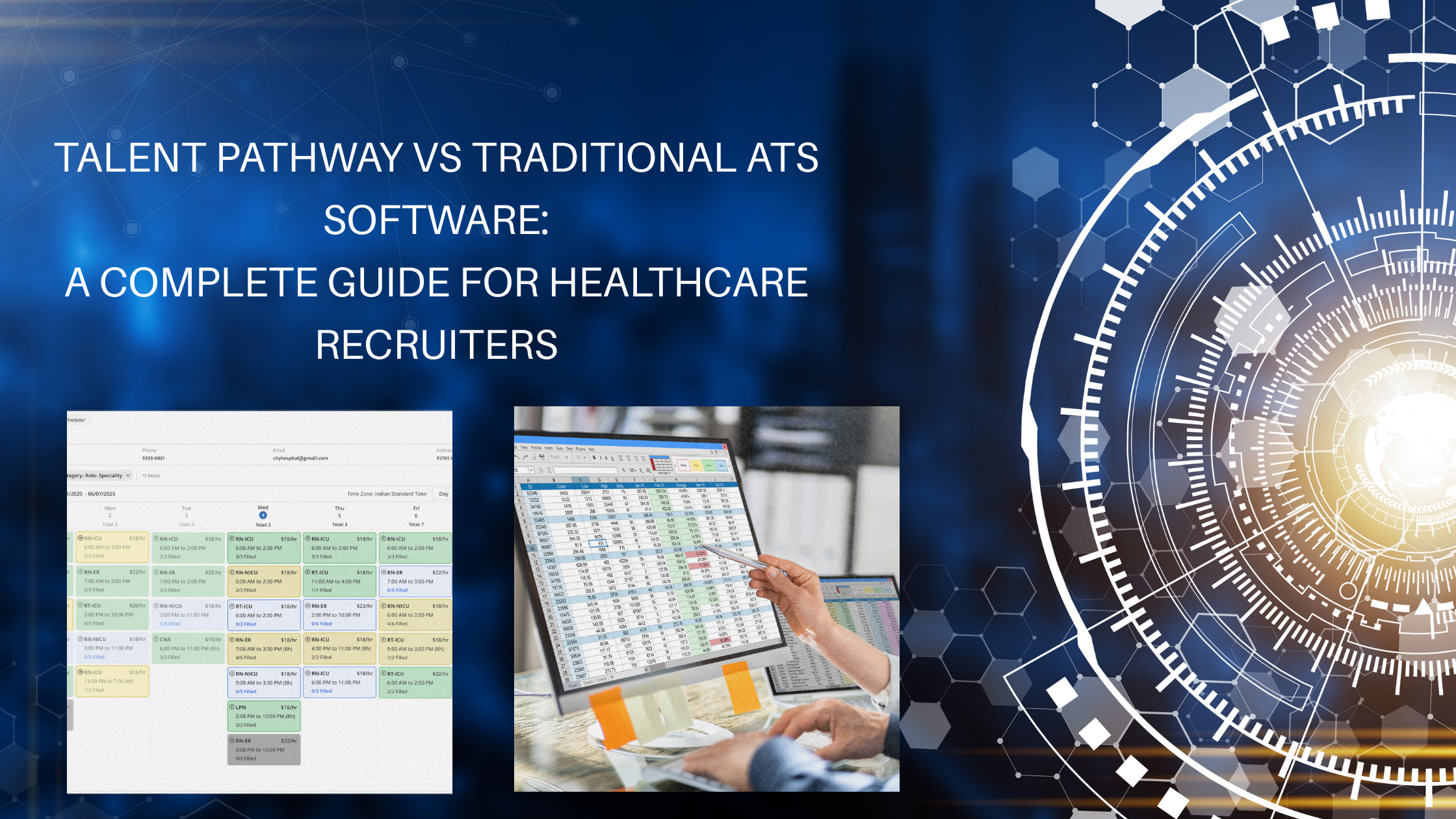
Many staffing agencies still use Excel or shared documents to assign shifts. While flexible, spreadsheets create version control issues, manual errors, and zero automation. There are no alerts for conflicts, expired licenses, or overtime violations.
A proper healthcare scheduling software solution removes manual dependency and automates critical checks.
Recruiters often manage candidates in one system and schedules in another. This separation leads to:
The best employee scheduling software for healthcare integrates scheduling with recruitment and compliance workflows.
Healthcare staffing requires strict credential verification. Many general scheduling tools do not validate whether a nurse’s license or certification is active before assigning a shift.
A modern healthcare scheduling software must automatically check compliance status before confirming assignments. Without this, agencies risk penalties and reputational damage.
Healthcare facilities often request urgent coverage. Agencies without automated scheduling software for healthcare rely on phone calls, mass texts, or manual outreach.
This leads to slower response times and missed revenue opportunities.
Advanced employee scheduling software for healthcare enables real-time notifications, instant confirmations, and shift marketplace functionality.
Scheduling impacts revenue, but many tools don’t connect shifts to pay rates, margins, or timesheets.
Healthcare scheduling software designed for staffing agencies connects shift assignment to payroll, billing, and margin tracking-ensuring operational clarity.
Healthcare staffing is not standard workforce management. It requires specialized logic.
A purpose-built healthcare scheduling software should include:
Generic workforce tools may schedule employees, but only true scheduling software for healthcare understands compliance-first staffing.
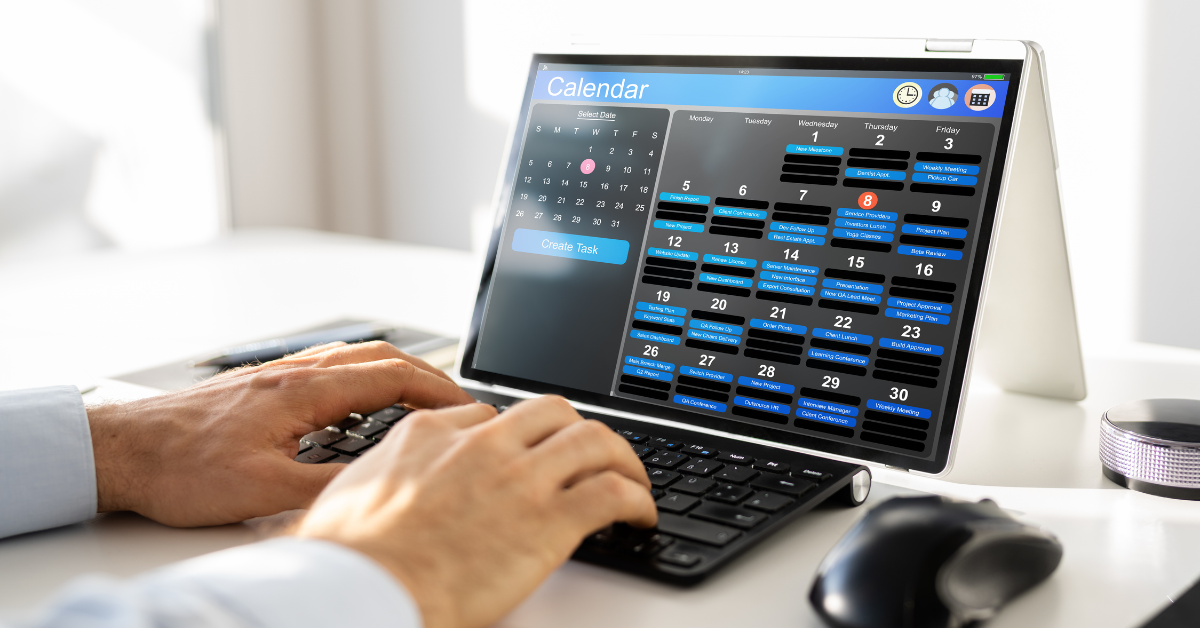
Agencies must instantly see which clinicians are available, credentialed, and ready to work. Employee scheduling software for healthcare should provide dynamic calendars and automated updates.
The best healthcare scheduling software verifies licenses and certifications before confirming assignments. This reduces risk and ensures regulatory compliance.
Healthcare professionals expect mobile-first scheduling. Modern scheduling software for healthcare should allow staff to view, accept, or decline shifts directly from their devices.
When scheduling is disconnected from payroll, errors increase. Healthcare scheduling software should sync shifts with timesheets, payroll calculations, and invoicing systems.
As agencies expand to new facilities and regions, scheduling complexity increases. The right employee scheduling software for healthcare scales without slowing down operations.
General workforce management tools often lack:
This forces agencies to rely on manual workarounds.
Healthcare staffing agencies require healthcare scheduling software built specifically for clinical staffing-not retail, hospitality, or corporate office environments.
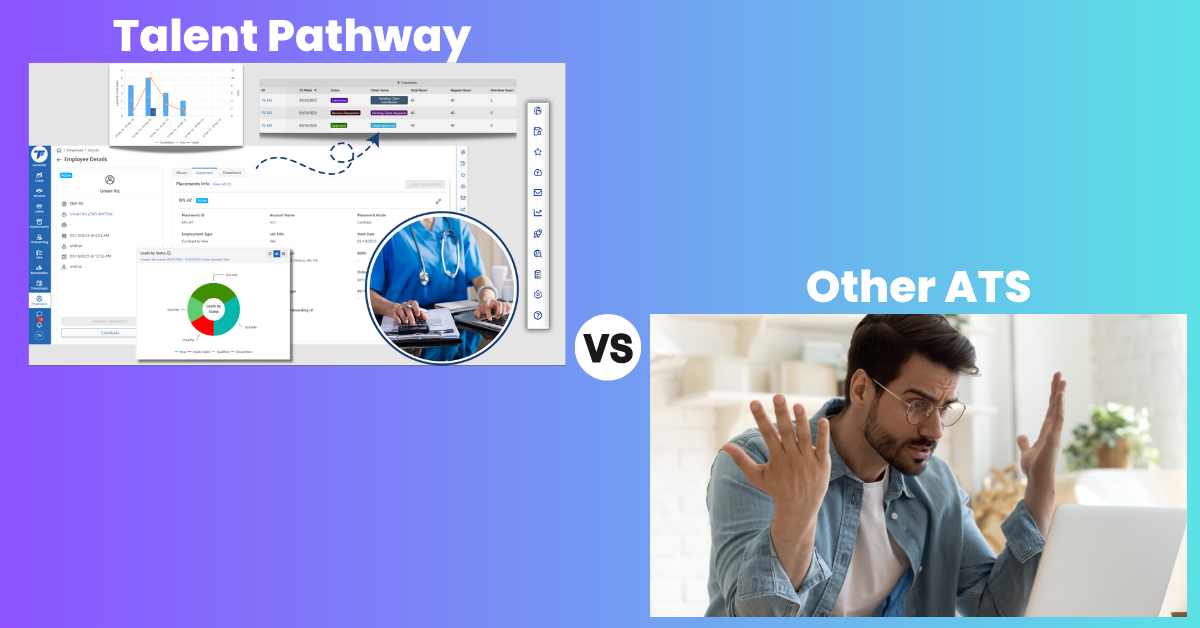
Talent Pathway offers purpose-built healthcare scheduling software designed specifically for staffing agencies.
Instead of treating scheduling as a standalone feature, Talent Pathway connects recruitment, compliance, and scheduling into one unified platform.
With Talent Pathway, agencies can:
This integrated approach eliminates fragmented workflows and reduces administrative burden.
One of the biggest advantages of modern healthcare scheduling software is integration with hiring workflows.
Talent Pathway integrates scheduling with its healthcare-focused recruitment platform. Agencies can seamlessly move candidates from hiring to scheduling without re-entering data.
For agencies evaluating a broader recruitment solution alongside scheduling, Talent Pathway also provides a full healthcare-focused platform. Learn more about its healthcare applicant tracking capabilities.
Combining scheduling software for healthcare with applicant tracking creates a single source of truth for recruiters and operations teams.
Healthcare staffing agencies that upgrade to advanced employee scheduling software for healthcare typically experience:
The right healthcare scheduling software doesn’t just organize shifts-it drives measurable business growth.
If your team experiences any of the following, it may be time to upgrade:
Modern scheduling software for healthcare resolves these inefficiencies.
The healthcare workforce landscape is evolving rapidly. Facilities demand speed. Clinicians expect flexibility. Compliance requirements continue to tighten.
Healthcare staffing agencies that adopt advanced healthcare scheduling software gain a competitive advantage through automation, visibility, and scalability.
Those that rely on outdated systems risk operational bottlenecks and lost placements.
In 2026, healthcare scheduling software is no longer optional for staffing agencies-it is foundational to efficient operations. Generic tools cannot handle credential-driven staffing, high-volume placements, or real-time compliance validation.
Purpose-built scheduling software for healthcare empowers agencies to streamline workflows, reduce risk, and grow sustainably.
If your staffing agency is ready to eliminate manual scheduling chaos and improve placement efficiency, Talent Pathway offers healthcare scheduling software built specifically for healthcare recruiters and staffing operations teams.
Discover how Talent Pathway can transform your scheduling, compliance, and recruitment workflows-all in one platform.
Explore Talent Pathway today and take control of your healthcare staffing operations.