
As healthcare staffing becomes more complex in 2026, agencies and healthcare organizations are increasingly encountering two terms that often get confused: MSP and VMS.
Understanding msp vs vms is essential for healthcare staffing agencies that want to scale operations, improve vendor relationships, and compete effectively in a technology-driven staffing market.
While the terms are closely connected, they are not the same thing.
One refers to a service model. The other refers to a technology platform.
Yet many recruiters entering MSP programs or working with hospital systems still struggle to fully understand how these models work together—and how they impact daily staffing operations.
This guide breaks everything down from the basics, helping healthcare staffing agencies understand the differences, benefits, challenges, and future of MSPs and VMS platforms.
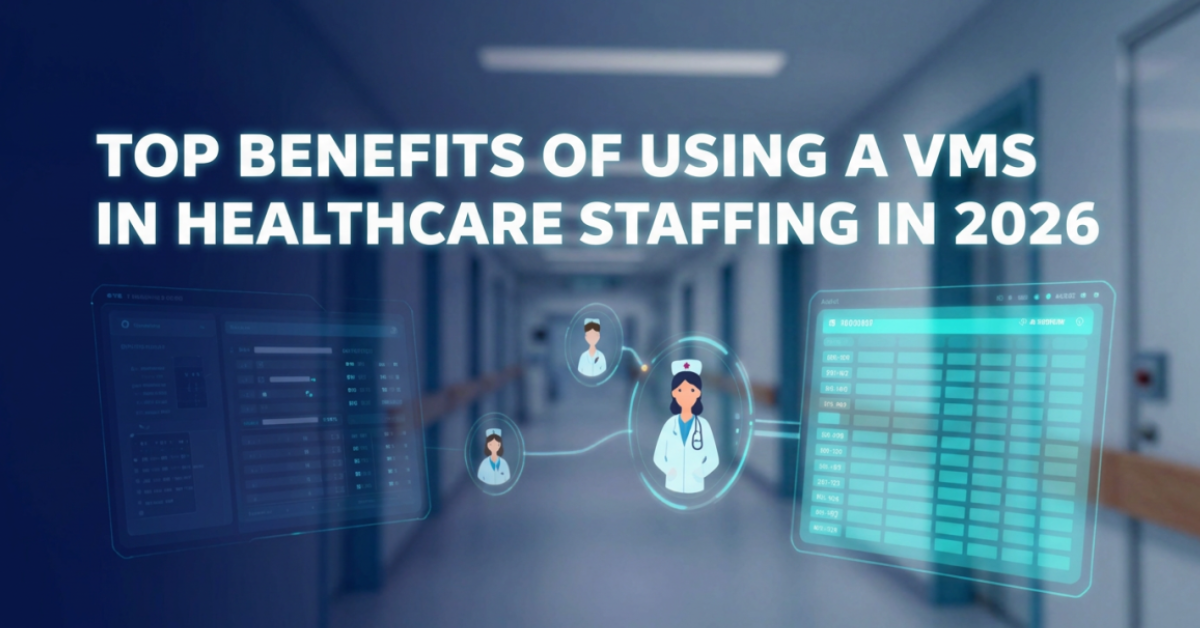
A Vendor Management System (VMS) is a software platform used to manage contingent workforce operations.
In healthcare staffing, a VMS helps hospitals, healthcare systems, and staffing agencies coordinate temporary staffing needs through a centralized workflow.
A healthcare VMS typically handles:
The VMS acts as the operational system where staffing activity takes place.
Think of it as the technology infrastructure that organizes staffing workflows.
An MSP, or Managed Service Provider, is a company or organization responsible for managing contingent staffing programs on behalf of a healthcare facility.
Instead of the hospital coordinating directly with dozens of staffing agencies, the MSP oversees:
The MSP becomes the operational manager of the staffing ecosystem.
In many healthcare staffing environments, the MSP also manages the VMS platform used by staffing vendors.
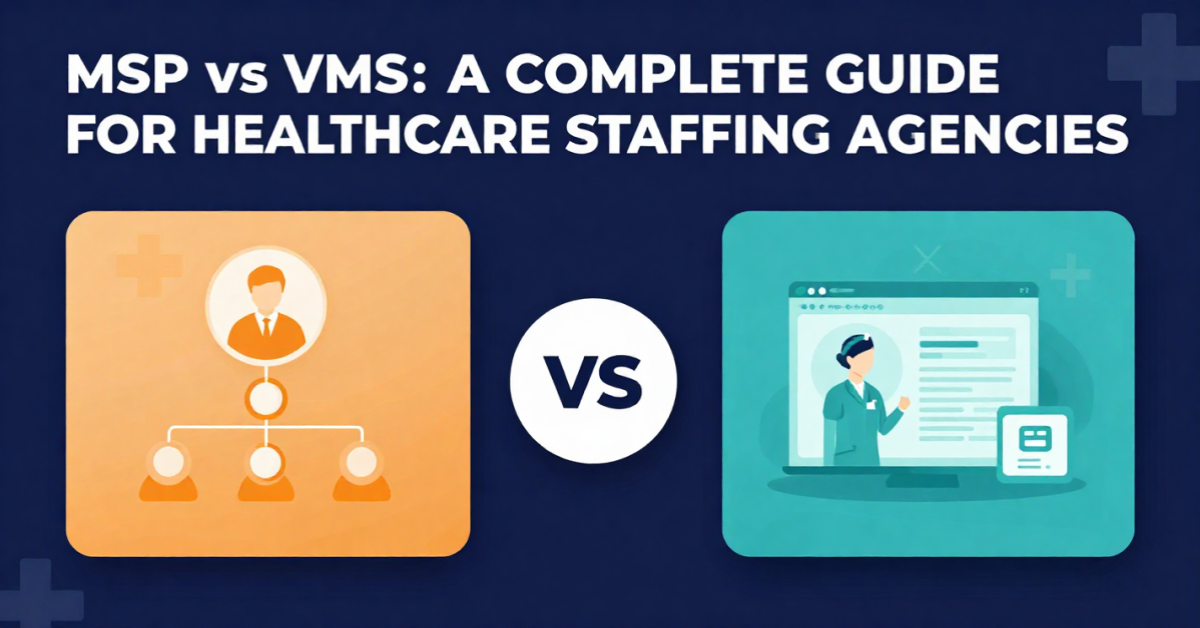
The easiest way to understand msp vs vms is this:
They work together—but they are not interchangeable.
Think of a VMS like a hospital management system software.
The platform organizes workflows and data.
The MSP is the team operating and managing that system strategically.
One provides the infrastructure.
The other manages the process.
In many healthcare staffing programs, the MSP uses a VMS platform to manage staffing operations.
Here’s how the relationship typically works:
A hospital or healthcare organization identifies staffing needs for:
The MSP manages the staffing program by:
The VMS platform facilitates:
Healthcare staffing agencies access requisitions through the VMS and submit qualified clinicians.
This creates a centralized and structured staffing process.
Healthcare staffing has become increasingly complex over the last several years.
Healthcare organizations now manage:
Manual coordination is no longer scalable.
This is why MSP and VMS adoption continues growing rapidly across healthcare systems.
Understanding the value of a VMS helps agencies operate more effectively within modern healthcare staffing ecosystems.
Instead of relying on fragmented communication, staffing agencies receive requisitions through a centralized platform.
This improves:
Speed matters in healthcare staffing.
VMS platforms streamline submission workflows, allowing recruiters to respond quickly to open requests.
This can improve:
Healthcare staffing requires extensive credential management.
A VMS helps agencies track:
This reduces compliance risk and operational errors.
Modern VMS platforms provide real-time insight into:
This helps recruiters prioritize efforts more strategically.
While staffing agencies interact heavily with the VMS, healthcare facilities often see the greatest value from MSP oversight.
Instead of managing dozens of staffing agencies individually, facilities work through a centralized MSP structure.
This creates:
MSPs help healthcare organizations maintain consistency across staffing operations.
This includes:
An MSP helps organizations gain visibility into workforce spending and staffing efficiency.
This supports:
MSP programs improve coordination between staffing vendors, helping facilities fill shifts more effectively.
This becomes especially important in:
There’s often confusion surrounding these models.
Let’s clarify a few common misconceptions.
They are related but different.
One manages people and processes.
The other manages workflows and data.
Not at all.
A VMS organizes staffing workflows, but recruiters still play a critical role in:
Technology supports recruiters—it doesn’t replace them.
Even smaller staffing agencies increasingly work within MSP ecosystems.
Understanding these workflows is becoming essential for growth and competitiveness in healthcare staffing.
While these models offer efficiency, they also introduce challenges for staffing agencies.
Common issues include:
Success requires agencies to operate with strong internal workflows and technology support.
The healthcare staffing industry is continuing to evolve rapidly.
In 2026 and beyond, MSP and VMS environments are becoming more:
Modern staffing operations increasingly depend on:
Agencies that adapt to these changes will be better positioned to scale successfully.
One of the biggest operational challenges agencies face is disconnected systems.
Recruitment, onboarding, credentialing, scheduling, and compliance often exist in separate tools.
This creates:
Integrated staffing platforms help agencies operate more efficiently within MSP and VMS ecosystems.
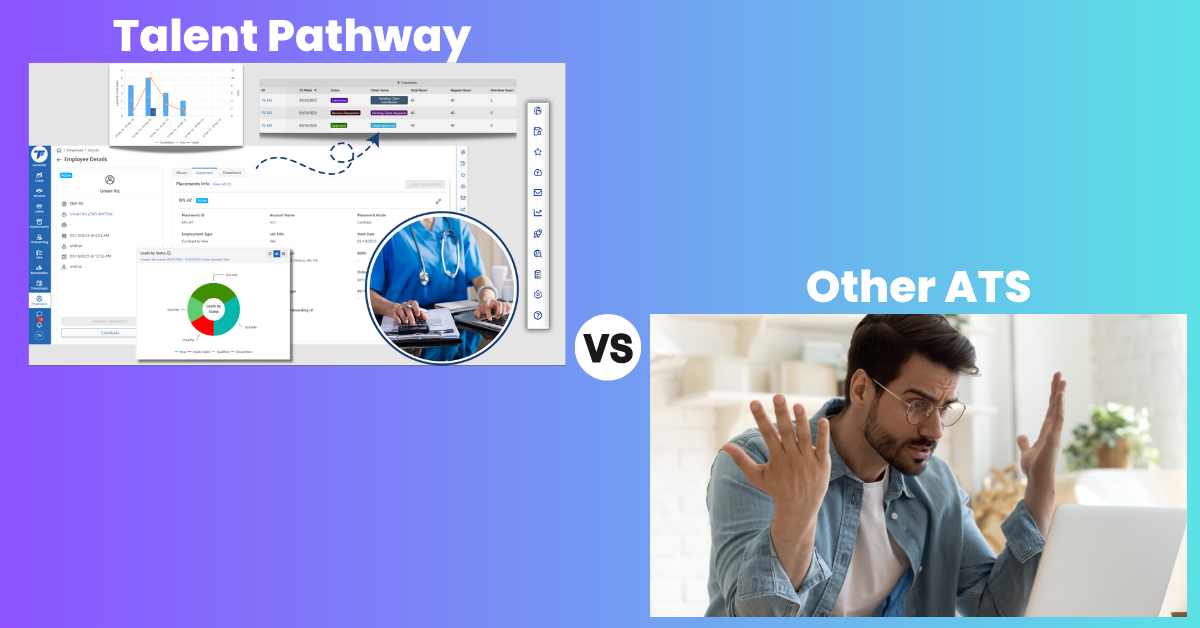
At Talent Pathway, we understand that healthcare staffing agencies need more than isolated software tools.
Modern staffing operations require connected workflows that support:
By centralizing these processes, agencies can improve operational speed, reduce manual coordination, and respond more effectively within MSP and VMS-driven staffing environments.
Understanding msp vs vms is becoming increasingly important for healthcare staffing agencies operating in today’s workforce landscape.
While a VMS provides the technology infrastructure for staffing workflows, an MSP oversees and manages the broader staffing program.
Together, they create a more structured, scalable, and efficient staffing ecosystem.
As healthcare staffing continues evolving in 2026, agencies that understand these models—and build workflows around them—will be better equipped to compete, scale, and deliver stronger workforce outcomes.
Talent Pathway helps healthcare staffing agencies simplify recruitment, onboarding, credentialing, and workforce management through a connected platform built for modern staffing workflows.
With centralized visibility and workflow automation, your team can:
The future of healthcare staffing is integrated, technology-driven, and fast-moving.
Talent Pathway helps your agency stay ahead.