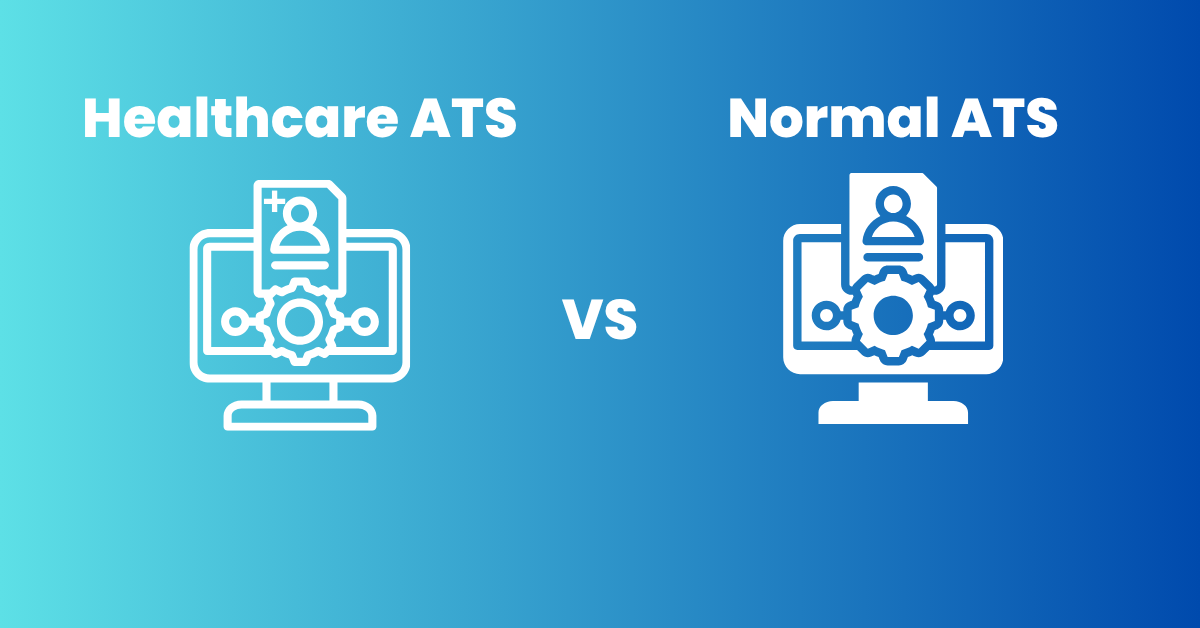

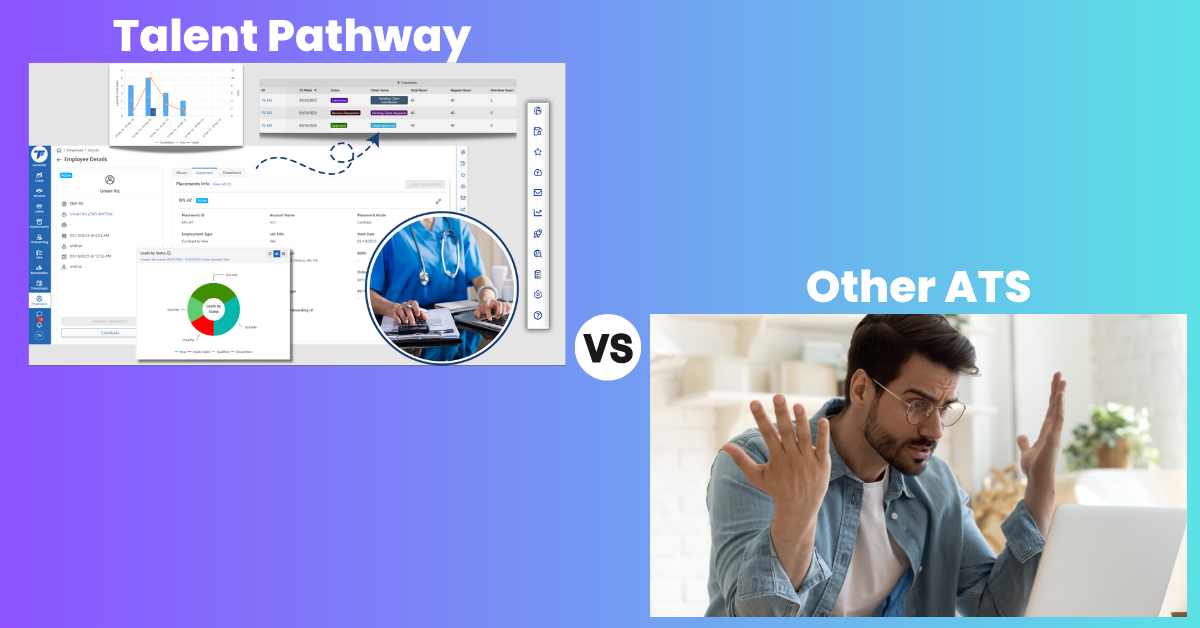
In 2026, healthcare hiring has reached a tipping point. With rising compliance demands, urgent staffing needs, and intense competition for qualified talent, recruiters can no longer rely on generic tools. A healthcare applicant tracking system is no longer a “nice to have”-it has become a strategic necessity. Unlike traditional ATS platforms built for general hiring, a healthcare applicant tracking system is designed specifically to handle credentialing, licensing, compliance, and high-volume healthcare recruitment workflows.
Healthcare recruiters and staffing agencies are switching because traditional systems simply cannot keep up. This article breaks down exactly why a healthcare applicant tracking system outperforms a traditional ATS, and why forward-thinking recruiters are making the shift now.
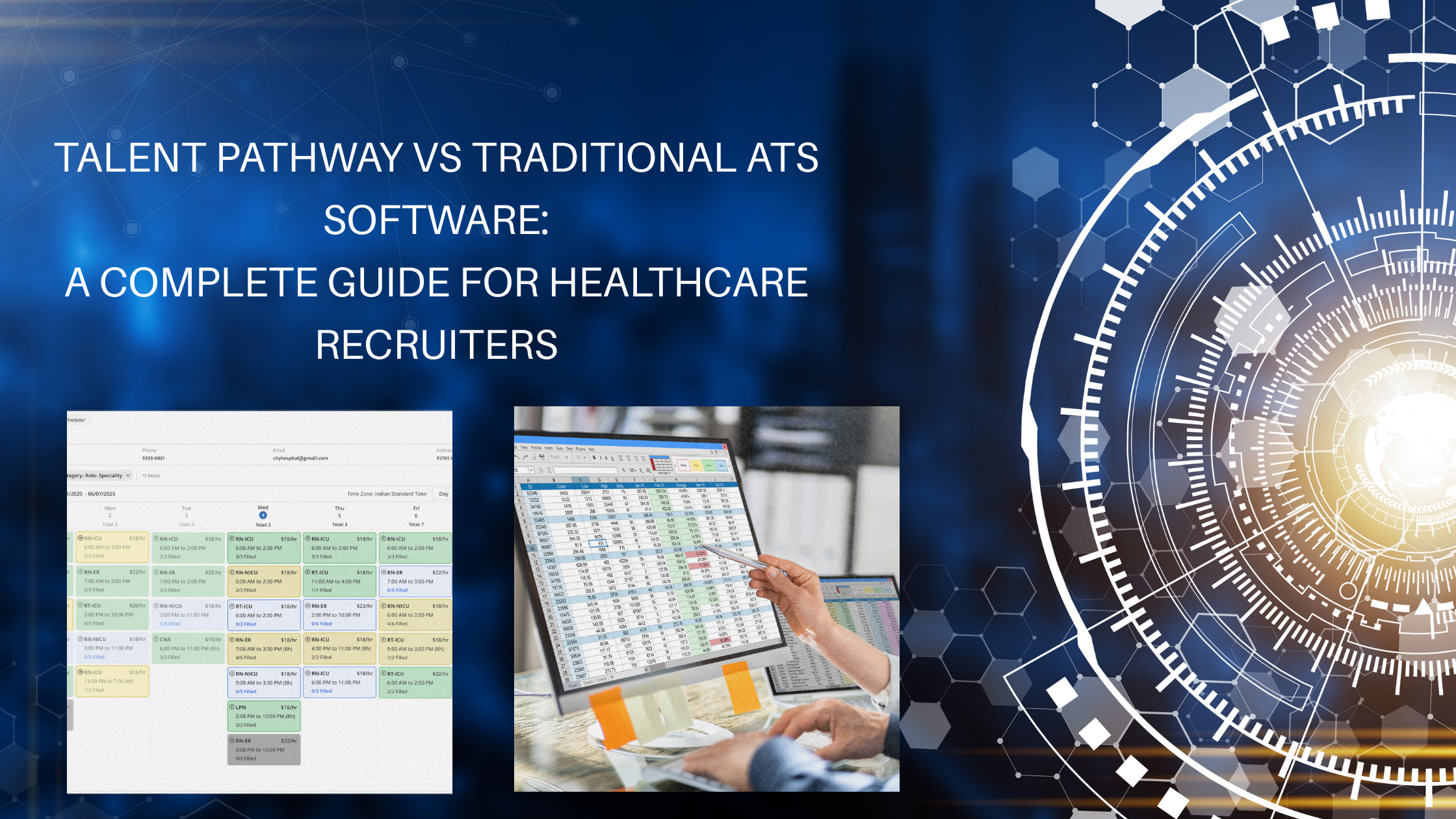
A traditional ATS works well for corporate roles, tech hiring, or standard recruitment pipelines. However, healthcare hiring is fundamentally different.
Healthcare recruiters deal with:
Traditional ATS platforms were never built to manage this complexity. As a result, recruiters are forced to rely on spreadsheets, emails, and manual follow-ups-slowing down placements and increasing compliance risk.
This gap is exactly why healthcare applicant tracking systems are replacing traditional ATS platforms across healthcare staffing agencies.
A healthcare applicant tracking system is purpose-built software designed exclusively for healthcare recruitment and staffing workflows. Unlike generic systems, it supports the unique operational, regulatory, and compliance needs of healthcare organizations.
Modern healthcare applicant tracking systems allow recruiters to:
In contrast, a general applicant tracking system treats healthcare roles the same as any other job-creating friction at every stage of the hiring process.
Understanding the differences makes the decision clear.
A traditional ATS does not track healthcare credentials in real time. Recruiters must manually verify licenses, certifications, and renewals.
A healthcare applicant tracking system automatically tracks:
This ensures only compliant candidates move forward, reducing legal and operational risk.
Healthcare hiring is skill-critical. A generic ATS matches keywords. A healthcare applicant tracking system matches clinical qualifications, certifications, and specialty experience.
This allows staffing agencies to:
For recruiters, this alone is a reason to switch.
Healthcare staffing agencies often recruit hundreds or thousands of professionals across multiple specialties. Traditional systems struggle under this volume.
Healthcare applicant tracking systems are built for:
This scalability is essential in 2026’s fast-moving healthcare environment.
Healthcare professionals expect speed, clarity, and relevance. A traditional ATS offers a generic experience that often frustrates candidates.
A healthcare applicant tracking system provides:
This improves candidate engagement and acceptance rates.
The shift is not just about technology-it’s about survival and growth.
Healthcare talent shortages continue to grow in 2026. Recruiters must move faster than competitors. A healthcare applicant tracking system reduces time-to-hire by automating what used to take days or weeks.
Regulatory scrutiny is increasing. One missed license renewal can lead to fines or contract loss. Healthcare staffing agencies are switching to healthcare applicant tracking systems to stay audit-ready at all times.
Healthcare recruiters are specialists. They need tools that understand healthcare. A generic applicant tracking system simply cannot deliver the depth required.
Modern healthcare applicant tracking systems provide healthcare-specific analytics:
These insights help agencies scale smarter, not harder.
Many recruiters attempt to customize a general applicant tracking system for healthcare. While possible, it is inefficient and costly.
Customizations often:
An applicant tracking system for healthcare is designed from the ground up for these workflows, eliminating the need for constant fixes.
To understand the structural differences in more detail, read this comparison we’ve gone into detail about:
https://www.talentpathway.com/healthcare-applicant-tracking-system-vs-general-ats-key-differences-explainedIf you are evaluating platforms in 2026, the best healthcare staffing software should include:
Choosing the right system directly impacts placement speed, compliance accuracy, and recruiter productivity.
We tried customizing a traditional ATS for healthcare hiring, but it became unmanageable as we scaled. License tracking and compliance checks were always manual. After switching to Talent Pathway, everything-from credential visibility to shortlisting-finally worked the way a healthcare recruiter expects it to. - Senior Healthcare Recruiter, National Staffing Agency
Switching to a healthcare applicant tracking system delivers measurable business outcomes:
For staffing agencies, this translates into stronger client relationships and long-term growth.
Talent Pathway was designed with one clear focus: healthcare recruitment. It is not a repurposed general ATS-it is a healthcare applicant tracking system created specifically for healthcare recruiters and staffing agencies.
With Talent Pathway, you get:
It supports healthcare recruiters who need precision, speed, and reliability in every placement.
In 2026, the choice is clear. A traditional ATS may still work for general hiring, but it is no longer sufficient for healthcare recruitment.
A healthcare applicant tracking system offers:
This is why healthcare recruiters and staffing agencies are switching-and why those who don’t risk falling behind.
If you are a healthcare recruiter or staffing agency still relying on a traditional system, now is the time to upgrade.
Talent Pathway’s healthcare applicant tracking system is built to help you hire faster, stay compliant, and scale confidently in 2026 and beyond.
Explore Talent Pathway today and see how the right healthcare applicant tracking system can transform your recruitment process.